

Every Story Begins with Adventure
We're glad you're here to share in our story. Step into the world of Pages Past and Present and discover the castles, horses, and swords of 14th-century France.
Let the journey into the past begin.
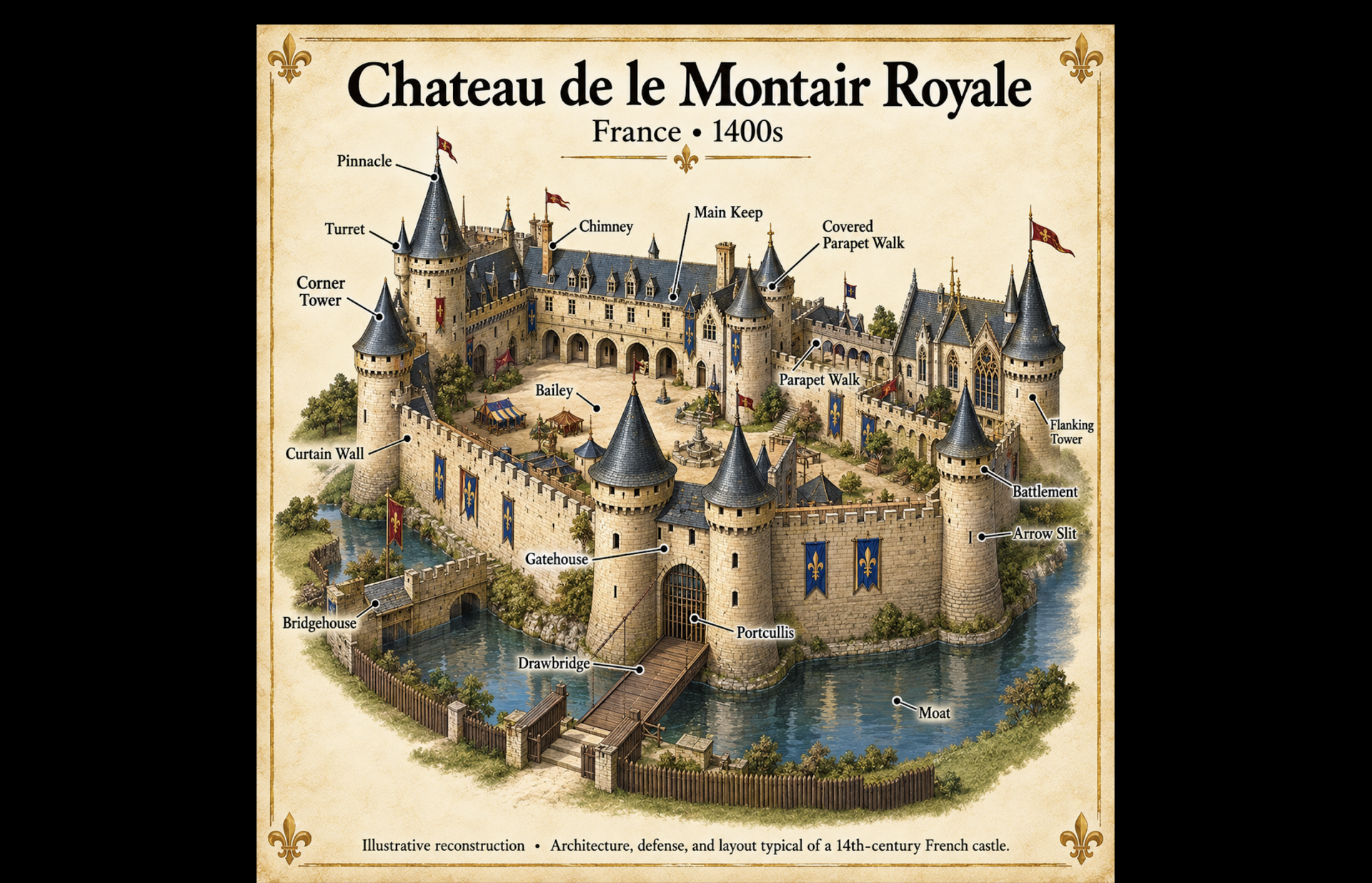
Behind the Castle Walls
Did You Know? In 14th-century France, castles were more than fortresses. They were supposed to be homes, centres of power, and places of protection during times of war.
In Pages Past and Present, the fictional castle is known as Château de Montclair Royale, where adventure, ambition, and life-changing choices await!
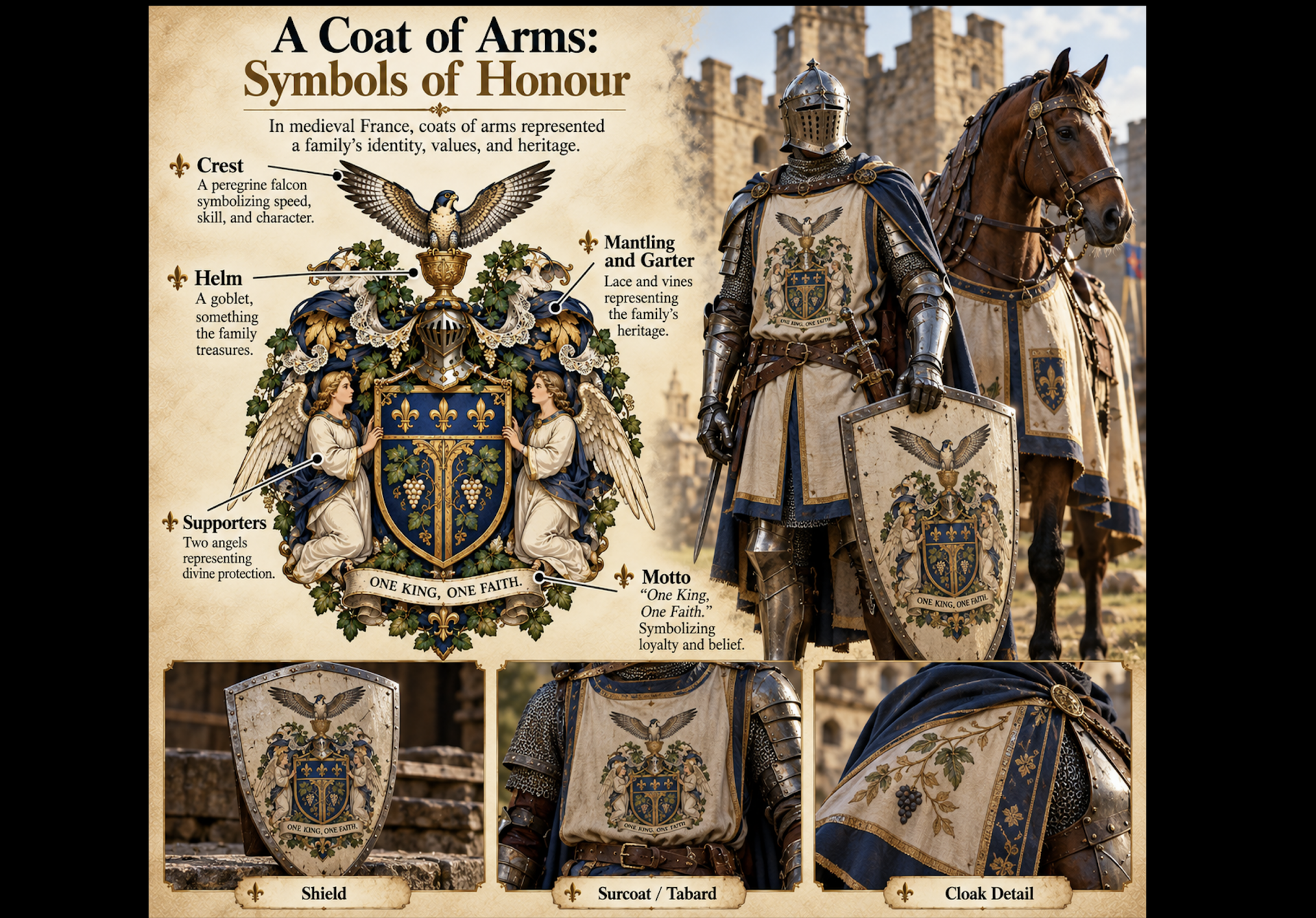
Coat of Arms
Did You Know? In medieval France, coats of arms represented a family's identity, values, and heritage.
Lord Barrett's coat of arms in Pages Past and Present featured, the crest, supporters, goblet, mantling, and the motto.
Fun Fact: Knights displayed their coats of arms so they could be recognized even beneath their armour!
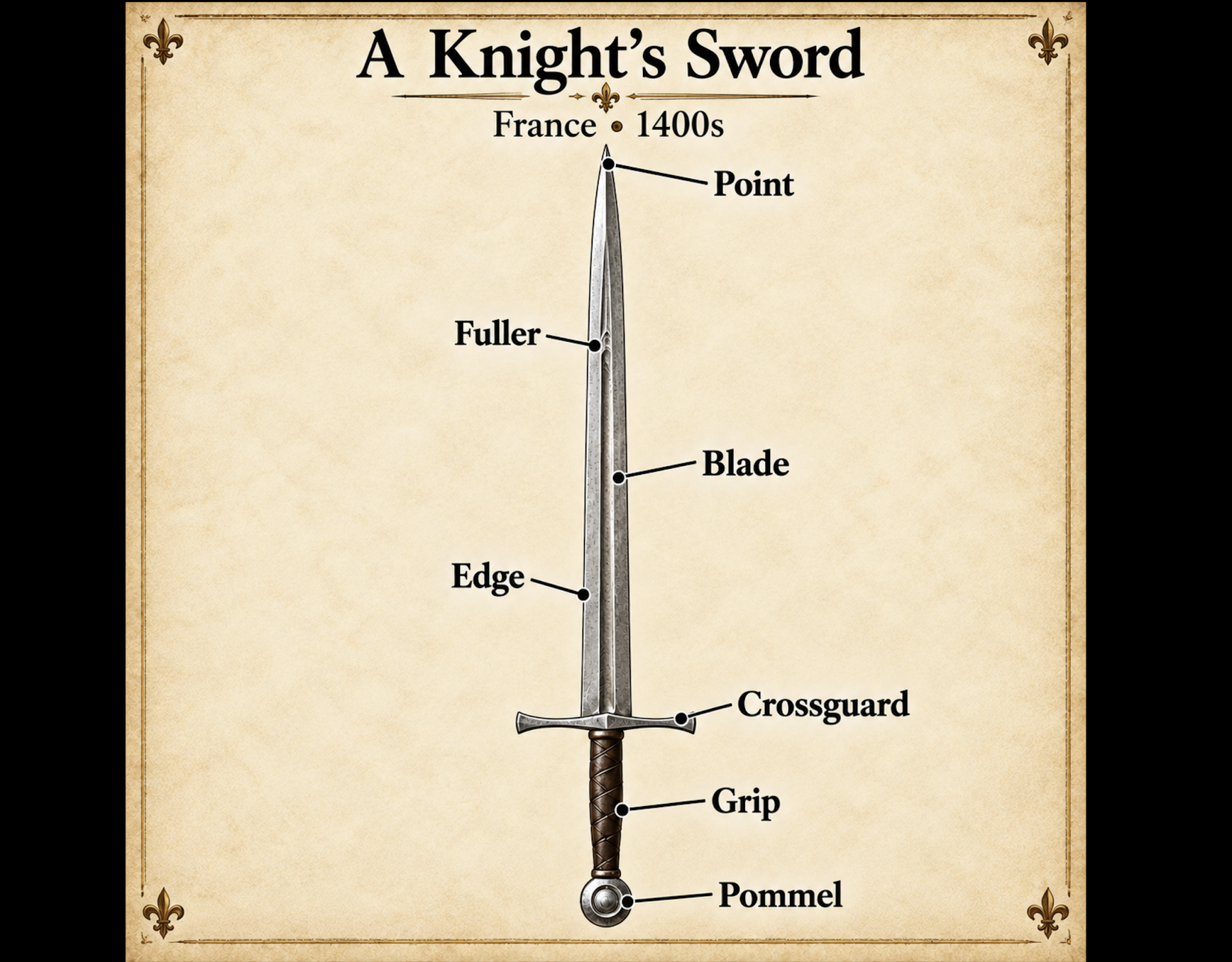
A 1400- Century Sword
Did You Know? Back then in France, a knight's sword was more than a weapon—it was a symbol of honour, duty, and status.
-
The Hilt: The sword's handle assembly, consisting of the crossguard, grip, and pommel.
-
The Gauntlet: An armoured glove worn to protect a knight's hand—not part of the sword!
-
The Fuller: A groove along the blade that helped reduce its weight without greatly weakening it.
-
The Crossguard: Helped protect the knight's hand from an opponent's blade.
-
The Pommel: Helped balance the sword and secure its grip.
Fun Fact: Not every medieval sword was designed to be used with one hand! Some knights wielded longswords with both hands for greater control and leverage.
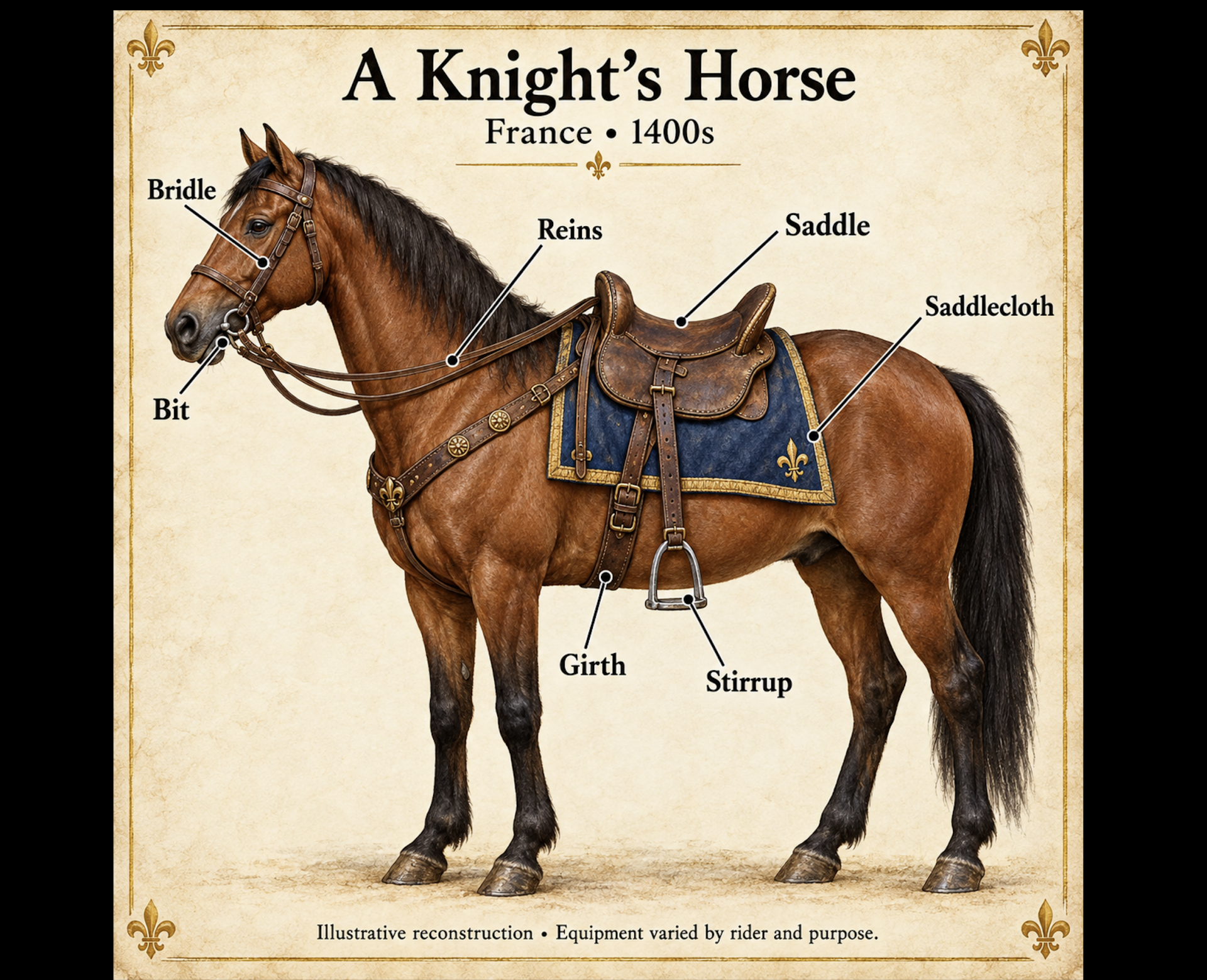
More Than Just a Horse
Did You Know? In 14th-century France, a knight's horse was more than just transportation—it was a valuable partner in battle!
Warhorses were specially trained to remain calm amid clashing swords, shouting soldiers, and the chaos of combat. A well-trained warhorse could be worth a small fortune!
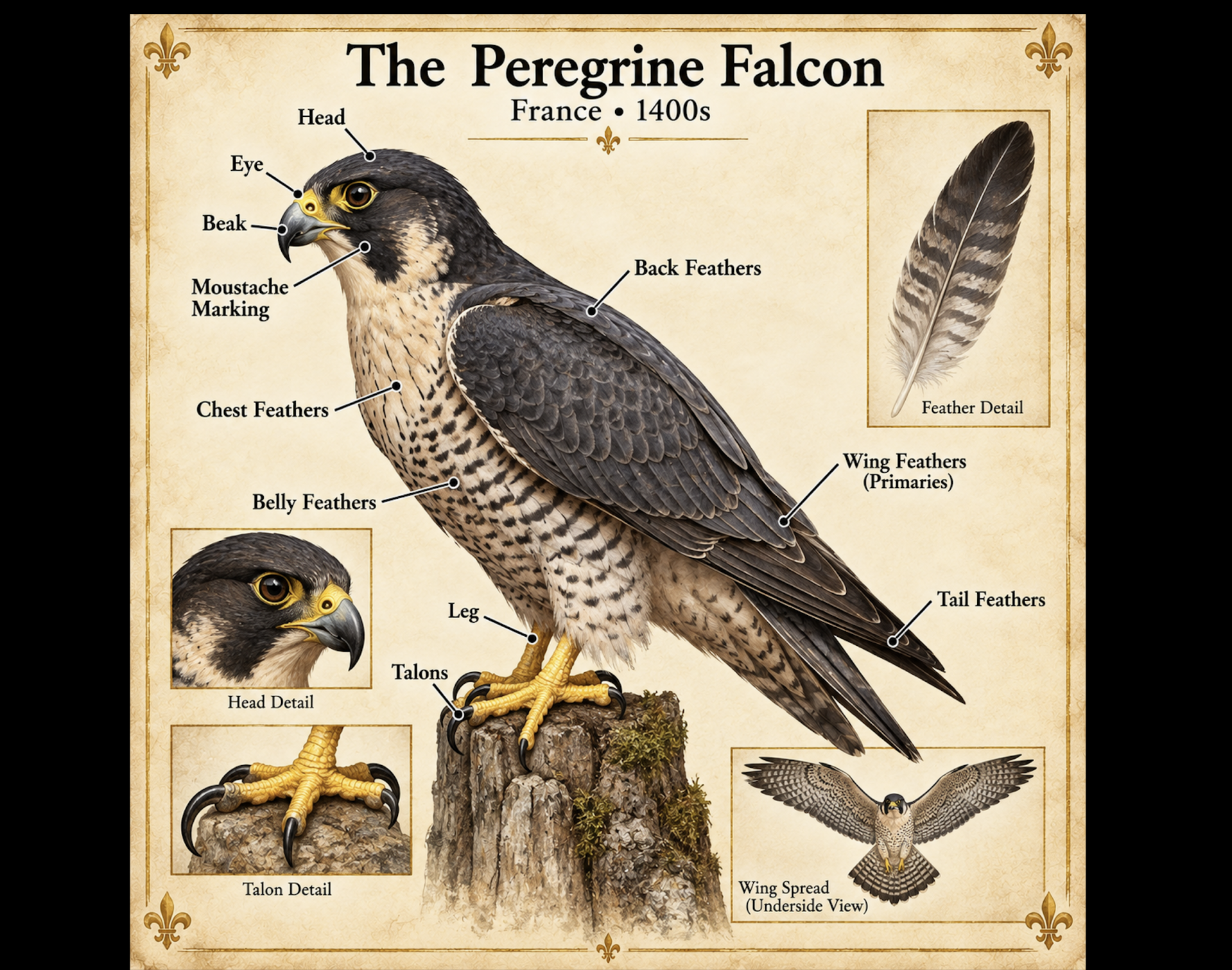
The Falcon: Bird of Prey
Did You Know? Peregrine falcons were prized for their incredible speed and hunting abilities. Falconry was a popular pursuit among nobles and royalty!
-
The Beak: Sharp and hooked, designed to tear apart prey.
-
The Talons: Powerful claws used to seize prey in flight.
-
The Wings: Long and pointed, built for remarkable speed and agility.
-
The Feathers: Help the falcon fly, steer, and stay protected from the elements.
-
The Moustache Markings: Dark facial markings that may help reduce glare from sunlight.
Fun Fact: Peregrine Falcons are the fastest animals on earth, in flight it's top speed is 389 km/h on a stoop, which is a hunting dive!